
It wasn’t her intent, but for years I was consistently outsmarted by my thirteen-year-old neighbor.
That experience has been on my mind all week as I conducted not one but two focus groups.
The subject: my new companion app for the Science of Getting Rich Journal.
And, as in my many intellectual defeats at the hands of that teenager, some of my basic assumptions were challenged.

I’ve long been suspicious of focus groups, especially when it comes to creative work.
I’m certainly not alone in this.
As the acclaimed British sculptor Antony Gormley proclaimed:
“You can’t get great art by committee.
Art simply isn’t democratic.”
This thought has been echoed by many, including Alfred Whitney Griswold, former president of Yale, who asked:
“Could Hamlet have been written by a committee,
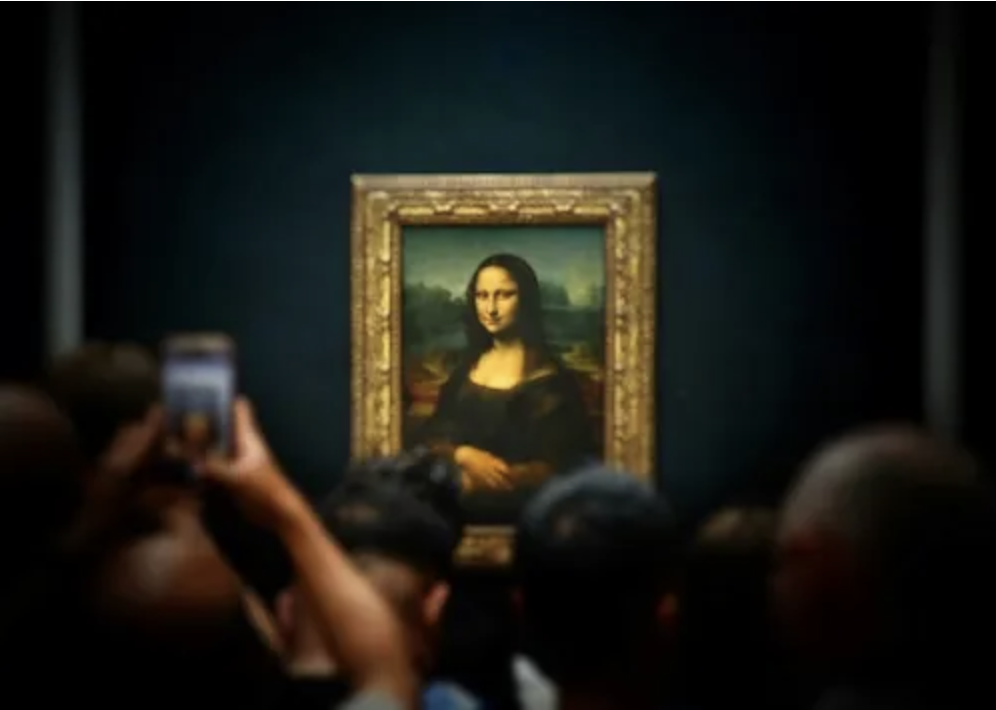
or the Mona Lisa painted by a club?”
I gravitate to that rebellious camp that believes asking everybody what they think about something is the best way to destroy its originality…
Although I’ve been guilty of batting for the other team.

In my twenties, I confess that I regularly participated in focus groups for extra cash.
My street-savvy actor buddy Alex turned me on to them, connecting me to several agencies who ran them for a variety of corporations.
It was easy, immediate money for an hour or so of giving your honest — or relatively honest — opinions.
Since you were chosen based on obvious demographics (age, gender), only once or twice did I cross the line into improv.
The most notable example was an unusually well-paid session for computer programmers for which I was definitely majorly underqualified.
Somehow I managed to bluff my way through it.
Even better, a tossed-off opinion of mine actually inspired an in-depth discussion that was way over my head.
Astonishingly, my contribution seemed to be of real value to the company in question, as they thanked me with surprising enthusiasm when handing me my check on the way out.

The purpose of my two focus groups this week was perhaps simpler.
I needed to combat what can happen when you’re too close to a topic.
Semantic satiation is when a word repeated over and over temporarily seems to lose its meaning.
Try saying “banana” 30 times aloud and you may find it stops registering as a fruit and starts sounding like a bizarre collection of syllables.
A visual parallel is Troxler fading, named after physician Ignaz Paul Vital Troxler, who first described the phenomenon in 1804.
If you stare steadily at one point, stationary objects in your peripheral vision can gradually fade out or even disappear.
And then there’s a third trap I’ve encountered, especially with that teenage neighbor: the folly of trying to make anything foolproof.

Although we’d lived in the same building for years, I’d had only passing exchanges with her parents in the hallways.
Even though said teenager quickly developed a deep affection for my chocolate lab Belle, petting and hugging her whenever their paths crossed, I still didn’t know her first name.
At a certain point, it became more embarrassing to ask than to just smile and say “hello.”
One day, I ran into her with her mother — whose first name I did know since it was on the buzzer directory by the entrance.
She told me that her daughter wanted to walk Belle and asked if I’d be interested in giving her a first job.
“Absolutely,” I replied. “Just enter your info in my cell so I can text you.”
I was thrilled, cleverly thinking that I could kill two birds with one stone: hiring a dog walker and solving the mystery of my teenage neighbor’s first name.
My neighbor promptly did so, smiling as she departed down the stairwell.
Unfortunately, she entered herself simply as “Belle’s Friend.”
(sigh)

Since I did have a lot of errands back then, I was able to offer “Belle’s friend” other chores.
Her intentions were always impeccable, even heroic, but somehow, no matter how precise I tried to make my instructions, they never quite worked.
There was always some level of miscommunication, often quite comic.
One day, this reached its zenith with a charity art auction for which I was donating one of my own pieces.
Since I couldn’t be there in person, I challenged myself to make my written instructions as foolproof as possible, so that nothing could possibly be misunderstood.
I made the language as precise as possible, making it clear that she was to take the package on the blue plastic cutting board in the kitchen to the charity and deliver it to this specific individual.
Returning home, I thought I had finally succeeded … that is, until the charity called to thank me for my donation, slightly baffled as to why “Belle’s friend” had insisted on leaving a blue plastic cutting board with it.

All of this was a great reminder that something can be absolutely clear to you but a mystery to someone else.
More detailed instructions don’t necessarily solve that problem.
The same thing happened with my app.
There were surprisingly obvious things I simply couldn’t see anymore, including the fact that after someone made a purchase, there was no congratulations or thank you screen.
Neither the marketing team nor I had noticed the omission.
The experience wasn’t about turning over my artistic judgment to a committee.
It was about seeing my creation through other people’s eyes and adjusting accordingly.
In fact, I was able to implement virtually all the suggestions within hours, some during the testing sessions themselves.
And that was truly amazing.

Long ago, “Belle’s friend” taught me that no instructions were foolproof.
Indeed, we can all fall victim to “the curse of knowledge” — a cognitive bias in which, once we understand something well, we have difficulty imagining what it’s like NOT to understand it.
From our perspective, everything seems obvious.
For others, however, things might be a confusing quagmire.
As we explore the theme of Possibility this month (new meditation HERE), it’s clear that we can’t always see what’s missing, what’s coming, or how something might be interpreted.
An outsider is often needed to reveal what familiarity makes invisible.
Ironically, I was that outsider in a focus group when I was bluffing my way through as a legit “Computer Guy.”
This week, two groups of friends did the same for me, helping me see both what was working and what was missing — something only fresh eyes could do.
Tell A New Story. Transform Your Life.