
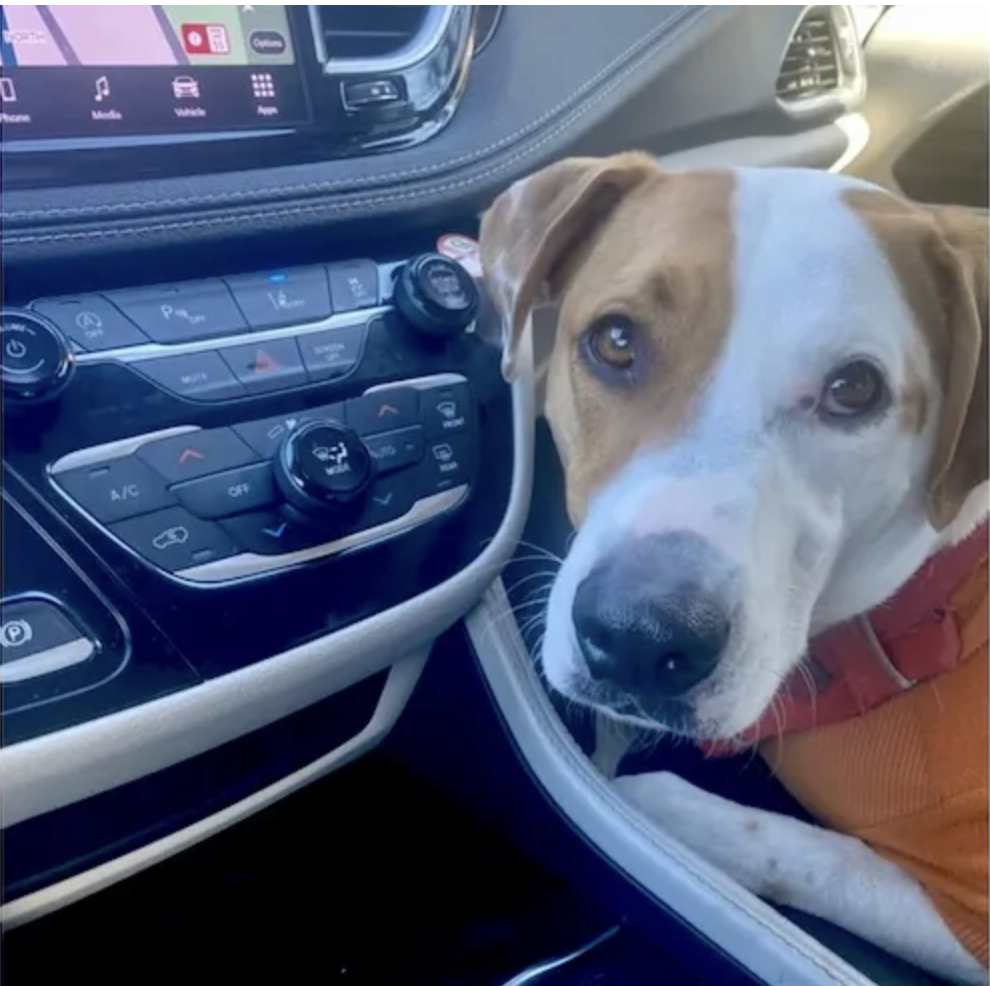
Sometimes, a road trip is necessary.
Or at least it simply feels that way.
It certainly did for me this week and, even though it often feels like I’m chained to my laptop, I set off with Vlad and my mother through the backroads of Connecticut in search of yet another rare book, one I suddenly felt was absolutely, immediately necessary.
Unable to find even a single copy in the statewide system — or even on eBay itself — I located one in the stacks of the University of Connecticut library.
The only question: would they allow me to borrow it?
Calling the day before to confirm that their Community Borrower Program would work, I spoke to an extraordinarily pleasant librarian who was nonetheless definitely not someone who believed in coloring outside the lines.
I explained that while I had local utility bills and plenty of other ID, I still had my NY State driver’s license.
After putting me on hold several times to confer with higher powers, I was told that only a passport — which oddly has no residence on it — would suffice.
When I told her that mine had expired — which is a whole other story — again she put me on hold.
As I wondered if it might require less paperwork to purchase an automatic weaponthan to check out a library book, the librarian returned with an offer: if I brought the expired passport and all the other promised ID, they’d make an exception in my case.
And so that Tuesday morning, we were off!

I wasn’t surprised that the book I was seeking was hard to find.
Lately, as I’m returning to writing a screenplay, I’ve shared that I’ve gone down a rabbit hole researching Frances Marion, the highest-paid screenwriter of the 1920s and 30s and the first person to win two Oscars for her scripts.
Although I’m still waiting for the interlibrary loan of her autobiography, I just discovered that she actually wrote another, even lesser-known book entitled How to Write and Sell Film Stories in 1937.
Fully aware of the irony that I was seeking out an industry guide just shy of 100 years old, nonetheless I was determined to get a copy in my hands as quickly as possible.
The irony, however, had only just begun.

Arriving at the information desk prepared for a customs agent-level interrogation, I had the exact opposite experience.
I filled out a basic form asking for name / address / phone number plus my driver’s license number.
Yet there was no confrontation about why I’d carelessly let my passport expire.
In fact, no one ever asked to see any ID at all.
Although my initial phone inquiries had taken over 30 minutes, “in real life” I had a laminated library card in my hands in under 5 minutes.
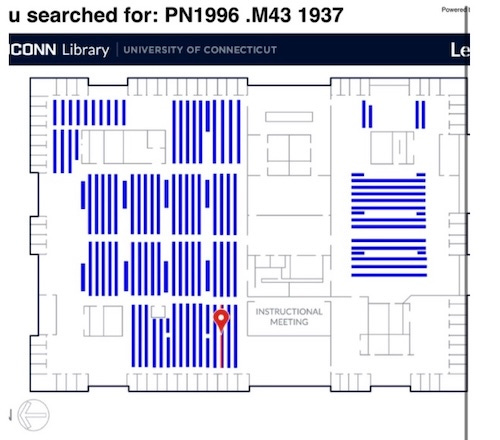
Not only that, the staff insisted on sharing a QR code I could scan for the book’s exact location, preventing any needless wandering amongst the stacks.
I couldn’t help but smile at the quirky juxtaposition of seeking out an 89-year-old book with my smartphone’s GPS.
One piece of advice that’s stuck with me for years comes from William Goldman’s 1983 book, Adventures in the Screen Trade.
Right away, in Chapter One, he offers this:
The single most important fact perhaps of the entire movie industry:
NOBODY KNOWS ANYTHING.”
The all caps are his, by the way.
And he actually repeats it on the same page, saying, “Again, for emphasis— Nobody Knows Anything.”
(Also in all caps.)
This is from the guy who wrote Butch Cassidy and the Sundance Kid, All the President’s Men, Marathon Man, and the novel The Princess Bride — and, like Frances Marion, he also has two Oscars.
Somehow, I find that almost cosmic shrug deeply reassuring.

Beyond a longing for a whimsical road trip, I did have something I wanted to research in Frances Marion’s book.
Namely, what no-nonsense methodology allowed her to churn out 200+ produced films, many of stellar quality.
As I mentioned, given that the book was written in 1937 and that we live in an attention-deficit economy, some of its advice might not be exactly current.
Sure enough, in the first chapter she talks about the “short life” of a film.
The world was very different in 1937, before there were TVs in every home, much less recordings and streaming.
Even so, what I found most compelling was how smart, how incredibly literate her book was.
It’s a universe away from the how-to manuals of today, particularly because what she believes is most central to storytelling is not the mechanics of formulaic, fill-in-the-blank plot, but character.
She calls character development:
“the most important factor in the film story, and no ingenuity or originality of the plot will save a photoplay which has inadequate characterization.”
Even beyond screenwriting, I definitely think she’s right.

About 2,500 years ago, Heraclitus said: ἦθος ἀνθρώπῳ δαίμων.
In case your Ancient Greek is rusty, that translates to:
Character is Destiny.
Who we are matters more than anything else.
What we do grows out of that reality.
That’s why so much personal growth work that starts with Action Plans and Goal Lists and Vision Boards is often doomed to fail.
By focusing only on changing external circumstances, we don’t address the person we need to become.
That’s partly why I find Future Self exercises — this month’s theme, meditation HERE— so compelling.
As Frances Marion wrote, “plot action should arise from and be determined by character.”
Taking this further, she writes that:
Very infrequently, if ever, does sheer chance play such an important part in our lives that events occur which have not in some way been shaped and affected by our own traits and habits…
Out of character arises a certain inevitability of action.

That’s why I’m very excited about Tell A New Story: In Practice.
The course starts this Wednesday for four live lessons (all recorded).
What’s powerful about this work is that it focuses directly on character development — in this case, our own.
Otherwise, things just keep repeating.
That’s why I want to address the story underneath the story, the one that’s secretly running the show.
Unless you dig a little deeper, it’s the same old song on repeat.
Or, as Oprah has said about relationship patterns:
“Same man, different pair of pants.”
Unexamined, the past is indeed entirely prologue.

Goldman’s book of screenwriting advices emphasizes that “no one knows anything.”
In that same ironically spirit, I also love that Diana Vreeland begins her memoir with:
“I loathe nostalgia.”
It’s wise to offer more than a grain of salt with your advice.
Fittingly, I’m writing this on Rosh Hashanah, the beginning of the Jewish new year and the first day of 5787.
I love the back-to-school energy in the air.
There was tons of that on the UConn campus as I asked several undergrads if Vlad and I were headed toward the right library.
(In retrospect, perhaps some of that back-to-school energy also fueled my journey’s urgency.)
When you want a new adventure, sometimes a road trip is the answer.
But if you really want to change your life, you need to tell a new story.
As Frances Marion knew, that begins not with plot, but character.
Fortunately, that’s something you have almost complete creative control over, and the final draft is entirely up to you.