
I’ve found it exceedingly rare in real life that I ever get so straightforward an apology.
To set the context:
Although September will always be “Back to School” month for me — and I’m launching my own new course HERE — I finished 99% of my Harvard Business School Foundry Bootcamp coursework in the last week of August.
It seemed foolish to let this massive technical resource sit quite literally at my fingertips and not use it.
Employing the super-specific Harvard AI to evaluate other projects beyond the wellness start-up, I tumbled down a rabbit hole with one.
After several rounds of complicated financial modeling and restructuring — the kind of thing where, if this were a Netflix experience, I’d step away and refill my wine glass until the movie was back on track — I got a communication that surprised me.
The Harvard AI’s honest confession:
“I have stale memory.”
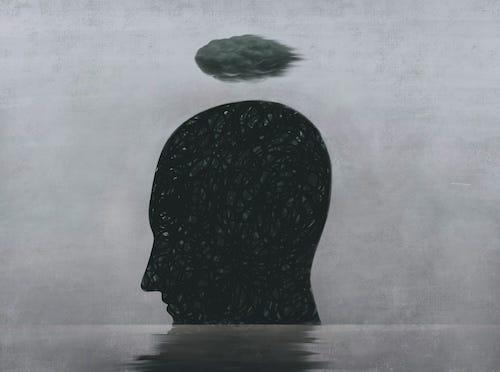
Unlike lots of people I know, the AI recognizes when its understanding is based on an outdated record.
Indeed, for this particular project — a very ambitious installation of my visual art — we’d moved from the model I started with to a different one, and then back to my original.
(Sidebar: I admit there was some satisfaction in that moment, the system conceding, 30 spreadsheets later, that my intuitive assumption had been right all along.)
I asked the AI to define exactly what “stale memory” really means.
This is how it responded:
“Stale memory” is my shorthand for a specific risk:
I save durable notes on your project (deal terms, decisions, key facts) so I don’t have to re-derive them every conversation.
Those notes are only as current as the last time I updated them — if something changes afterward (a number gets revised, a decision gets reversed) and I don’t go back and refresh the note, what I’m recalling is out of date even though it looks confident and specific.
Unfortunately, in real life people are rarely willing even to consider that they’re operating from old narratives and out-of-date interpretations, much less to volunteer to refresh them.
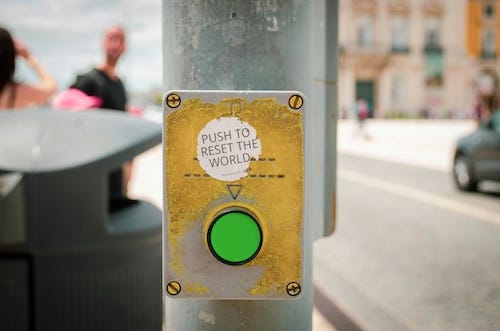
Speaking of “stale memories”…
Since the book we’re reading in The Transformation Book Club this month is Benjamin Hardy’s Be Your Future Self Now: The Science of Intentional Transformation, the theme for this month’s meditation at first seemed a slam dunk.
Selecting Connecting With Your Future Self as the theme — new meditation HERE— was the obvious choice.
Obvious, that is, until I remembered that I actually first recorded a Future Self meditation almost five years ago.
Once I rejected the idea of simply “recycling” that meditation rather than recording something new, the next question was whether I should even listen to the thoughts I had about my future self five years ago.
More importantly, does the formerly “Future Me” (now “Present Me”) really have anything new to say?
(Besides, how much do we even trust “that guy?”)

We’re often profoundly disconnected from our future selves.
Hal Hershfield is a psychologist and professor of behavioral decision-making at UCLA who has studied “future-self continuity” for nearly two decades.
One of his central findings is that we often regard our future selves almost as strangers — and therefore leave them to deal with the consequences.
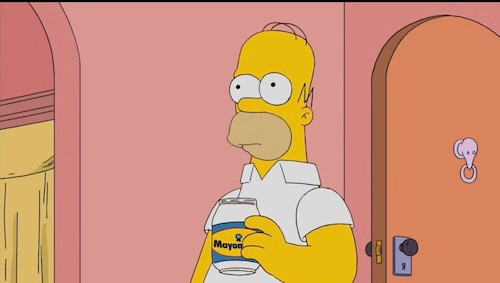
In Be Your Future Self Now, Hardy offers a humorous illustration by sharing a classic 2010 moment from The Simpsons.
Marge confronts Homer about his irresponsibility toward their children, saying, “Someday, these kids will be out of the house, and you’ll regret not spending more time with them.”
Homer tosses this off.
“That’s a problem for future Homer…
Man, I don’t envy that guy.”
Homer then fills a mayonnaise jar with vodka, drinks it, then collapses.
It does indeed feel like reality has a design flaw, identified in 1843 by the philosopher Søren Kierkegaard:
“Life can only be understood backwards;
but it must be lived forwards.”
In an echo that blends well with my own back-to-school nostalgia, Steve Jobs said in his famous 2005 Stanford commencement address:
“You can’t connect the dots looking forward.
You can only connect them looking backwards,
so you have to trust that the dots will somehow connect in your future.”
Sometimes — especially when we’re unaware of our deeply buried “stale memories” — this is all too easy to forget.

Although most of us may not be drinking vodka out of mayonnaise jars — at least not all of the time — in many ways we’re doing exactly that.
We can make better plans (or fancier vision boards).
We sign up for the deluxe gym membership or buy a fancy notebook for the new project.
But if the story underneath the story remains the same —
whether it’s “ I always get close then stop”
… or … c
t’s too late to begin again
… or …
I’m not the kind of person who can have that —
the outcome usually remains the same, too.
This is the work at the heart of my new live course, Tell A New Story: In Practice.
This isn’t about pretending your life is different or writing affirmations over a wound and calling that healing.
Over four Wednesday evenings, we’ll name the old story, build the new one, practice the identity it requires, and create the cues, rituals, and choices that help stabilize the shift.
The course begins September 16 at 7 p.m. ET, and recordings are included if you can’t attend live.
Early-bird enrollment is $47 through Wednesday, September 9 — and there may also be a little pop-up surprise that evening for those who sign-up by then.
Join HERE
Last week I wrote about how Dolly Parton’s passing affected me.
This week, I was also deeply moved by the deaths of Gloria Steinem — I’ll share more thoughts soon — and the poet Wendell Berry.
I’ve offered this poem before, but it seems particularly apt right now:
The Real Work
It may be that when we no longer know what to do
we have come to our real work,
and that when we no longer know which way to go
we have come to our real journey.
The mind that is not baffled is not employed.
The impeded stream is the one that sings.
This idea of bafflement and impediment being central to the real journey as humans strikes home.
Otherwise, we run the very real risk of doing exactly what the Harvard AI freely admitted to:
“What I’m recalling is out of date
even though it looks confident and specific.”
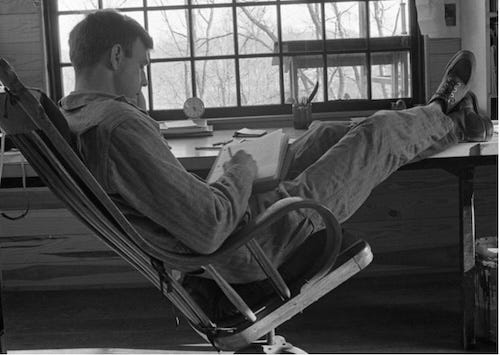
Wendell Berry, Henry County, Kentucky, 1970s. (James Baker Hall)
After five hours of work, when the Harvard AI and I arrived back at the model I’d entered the conversation with, I recalled another great poet’s lines — those of T.S. Eliot in the last of the Four Quartets:
“We shall not cease from exploration
And the end of all our exploring
Will be to arrive where we started
And know the place for the first time.”
Human beings rarely receive an alert telling us that our memory has gone stale, even though that awareness is essential to move forward.
Although the new meditation — HERE — is about connecting with your future self, it seems that life might be best lived moving in three directions at once:
Understanding the existing narrative backward, consciously creating the new one in the present, then living it forward through practice.
Again, that’s what the new course (HERE) is all about.
In the end, I decided against listening to the meditation I recorded five years ago.
I opted to make a fresh memory instead.
Tell a New Story. Transform Your Life.