

Something was definitely off.
The phone call left me worse off than before.
Because I was already out of sorts before the conversation, it wasn’t easy to trust my intuition (this month’s theme; meditation HERE) about the matter.
I’d finally reached an attorney on the phone — someone who was usually super-prompt in returning calls and emails.
I’d retained them over a decade before for a complicated NYC real estate conundrum.
The outcome of that gnarly battle had been an unequivocal success: I got what I wanted plus a nifty sum in my pocket.
Yet today, something just didn’t feel right.
Only later did I learn that there was a very good reason they hadn’t gotten back to me with their usual efficiency: days before, they had been arrested.

Unfortunately, anxiety and intuition can often be mistaken for each other.
Like getting a text from an unknown number, you can’t just put blind faith in the message.
Particularly when the stakes are high, it can be quite confusing.
Are we receiving a warning from our protective inner awareness… or are we recycling trauma messages that don’t apply?
Is our intuition warning us about something that’s truly amiss … or is our anxiety just shrieking because it doesn’t trust life?

For example, we often treat flying as a frightening thing, yet statistically the drive to the airport is far more dangerous than the flight itself.
The International Air Transport Association reported a 2024 fatality risk of 0.06 per million commercial flights.
That means, statistically, a person would have to take millions of flights before encountering a fatal-risk event.
That year, there were actually zero U.S. commercial airline fatalities, while worldwide there were only seven fatal commercial aviation accidents among 40.6 million flights.
Anxiety, however, is not a good statistician.
It will panic about a little turbulence while calmly letting us merge onto the highway.
It reacts to the unnaturalness of flying versus the ordinariness of a car ride, giving us entirely the wrong prediction.

Ironically, intuition — although far wiser — might actually be the quieter voice.
Its message might be inconvenient, but it does not usually argue its case as loudly as anxiety does.
Intuition says, “Don’t go that way.”
Or, “Call this person.”
Or, “Something is off.”
Then it often becomes still.
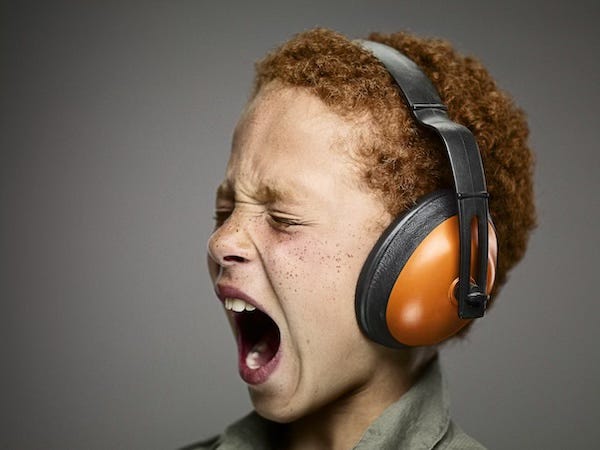
Anxiety, however, is often loud, urgent, and — this is key — enormously repetitive.
I’d loosely been in touch with this attorney over the years.
I had, in fact, sent a few clients their way with successful results.
Years after our initial dealings, when I had a new lease and asked them to look it over, they volunteered to eyeball it for free and alert me if there was anything untoward.
Although life was proceeding relatively smoothly for me on the housing front, it was comforting to think they were in my back pocket in case things took a darker turn.
Yet today, during our conversation — when I had some real issues to resolve — I no longer felt that way.
Particularly when they said that this time their retainer could only be paid in cash.

This reminds me of Stevie Smith’s poem “Not Waving but Drowning.”
Everyone misinterprets the man’s frantic gestures — ironically, since “he always loved larking.”
As the poet Caitlin Kimball wrote about it, sometimes it does feel like “Life is a series of opportunities to be misunderstood.”
Nobody heard him, the dead man,
But still he lay moaning:
I was much further out than you thought
And not waving but drowning.Poor chap, he always loved larking
And now he’s dead
It must have been too cold for him his heart gave way,
They said.Oh, no no no, it was too cold always
(Still the dead one lay moaning)
I was much too far out all my life
And not waving but drowning.

Another reason why intuition and anxiety can become confusingly intertwined is that they both speak in the language of feeling.
Not only is intuition generally quieter, it’s also less demanding and sometimes seems less helpful.
Intuition might point toward a direction, whereas anxiety holds out for a guarantee.
Intuition tends toward the quiet nudge; anxiety is — unlike this attorney — determined to litigate its case quite freely.

To balance things out, I feel compelled to share an intuitive impulse toward the positive, one that’s working out triumphantly.
Rushing off to my buddy Joe’s surprise bachelor party, I was startled when the first proofs of the SGR Journal(HERE) arrived early, moments before I hopped on the train.
I stuffed one in my knapsack and headed off.
When I arrived, the first person I encountered was someone I’d met maybe a decade ago, and I was tempted to share the proof.
One thing I’ve learned — often the hard way — is that it’s wise to be cautious about unveiling a project you haven’t yet launched.
There’s a right moment to bring one’s work out into the open, exposing it to a world that can be harsh, judgmental, and dismissive.
The voice of common sense — and creative anxiety — was clear: better to wait until all your creative ducks are in a row.
My intuition, however, quietly prodded me otherwise.
It turned out that he and his business partner had not only recently started their own marketing company but were also both huge fans of the original book.
In fact, they were about to reread it.
Flash forward through several delightful conversations, and they’ve become the perfect marketing partners … all because I trusted the quiet impulse to reveal something rather than keep it hidden in my knapsack, waiting for the perfect moment, not realizing it was right in front of me.

After that anxiety-producing conversation where I felt the intuitive warning, I called my real estate buddy Joshua, who set me up with three new legal contacts.
I hired one, which eventually yielded very successful results.
Soon after that first call, however, I saw the headlines re: my former attorney.
It was all over the papers: they had been indicted for several felonies involving past clients.
Eventually, they pleaded guilty and were disbarred.
Were my intuition a person advising me so successfully, at the bare minimum, I’d certainly owe it an extremely nice dinner at the restaurant of its choosing.
I suppose, though, that my intuition was simply doing its job, one that’s very different from my anxiety’s.
Admittedly, distinguishing them is sometimes challenging, but anxiety is usually trying to protect the old self from perceived discomfort.
Intuition, however, is mostly trying to guide the emerging self away from harm and toward truth or growth.
Fortunately, the more we listen to that calm inner voice of knowing, the clearer it becomes.