

It was a singularly hilarious deflation of my ego.
The day began promisingly enough, inspired even.
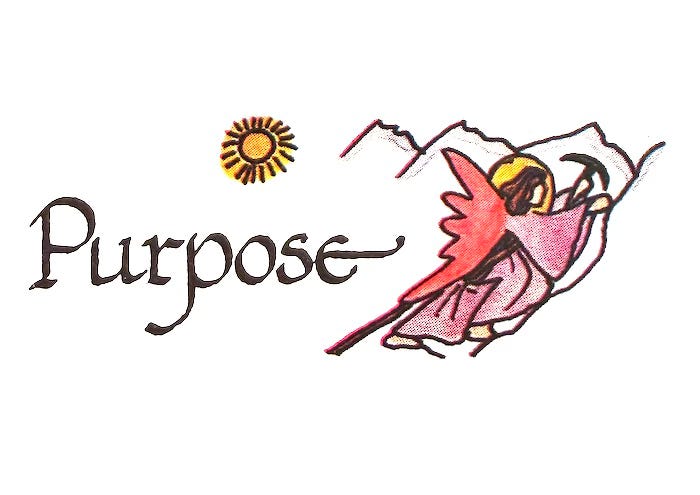
I had drawn the Angel of Purpose from my deck, an image of an angel climbing a mountain.
I journaled extensively about related thoughts, defining my own heroic mission for the day:
Launching a new Substack for The Science of Getting Rich Journal (HERE).
Having successfully scaled this mountain — which meant tripling my writing quota for the week — I headed off to a hot yoga class with great satisfaction.
Imagine my surprise when the lovely studio owner began the class with a shout out to one student — let’s call him “Jerome.”
Rather than the typical birthday announcement, though, she explained that:
Tomorrow, Jerome’s off to Climb Mount Everest —
For the Sixth Time!
When I take class, my ambivert personality switches fully into total introvert mode.
I like being entirely in my own — albeit sweaty — world.
This information about Jerome, however, was both impressive and distracting.
Positioned right behind me, he was already hard not to notice — strikingly fit, probably early 60s, chiseled with maybe 9% body fat, and not particularly flexible.
Now, however, I was contemplating the details of his adventures — wondering, for example, how many flights are required to actually get to basecamp at Kathmandu.
And since the theme this month is Proof (Meditation HERE), I found myself wondering what such extreme globe-trotting adventures were really all about.
Back to the new Substack…
The marketing team for The SGR Journal more or less insisted I start one, and, as with all things promotion-related, I’m sure they’re right.
I’ve written three foundation posts — including one I really like, I Am Not The Person to Tell You How to Get RichHERE — as well as offering a new meditation.
On Tuesdays, I’ll release a weekly post that’s much shorter than this newsletter.
There will also be occasional moments of unique content, all touching on the Journal’s philosophy of creating a richer life.
It’s completely free, of course, and I’d love you to check it out and
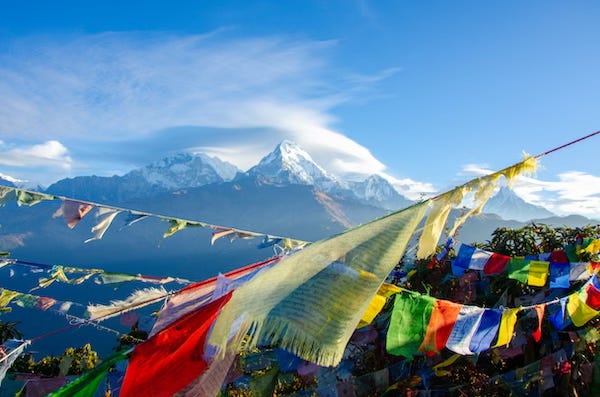
Back to Mt. Everest.
Ironically, this intersects directly with my theme of Proof.
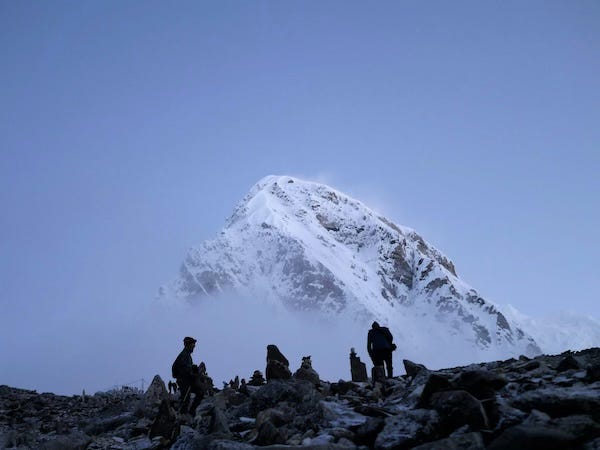
Perhaps surprisingly, in our digital age, when it comes to summiting Everest, technology has improved verification, but it has not eliminated disputes.
First, the summit itself can be rather tricky to prove from just a photo.
On Everest and other 8,000-meter peaks, people have long argued over whether someone truly stood on the highest point, stopped short at a subsidiary point, or photographed themselves somewhere that merely looked like the top.
Beyond this, there have been recent controversies over allegedly fake summit images.
Proof consists of an entire bundle of evidence.
You need to gather not only summit photos, but also witness accounts from teammates and Sherpas, radio logs, and GPS or tracker data.
Only then is it included in accepted records such as the Himalayan Database, proving that your claim is legit.

I also admit to a fondness for the Purpose Angel because of my bestselling course A Year To Get Rich With Purposeon DailyOM.
It always amazes me how many people that course has touched, how many have completed that 365-day journey, it’s own mountainous trek.
That course’s goal even aligns with the angel card’s message:
Clarify what you want and align your actions with the desired results.
Live with vision, intention, and determination.
Interestingly, even though angels have wings, apparently they also still enjoy the upward climb.
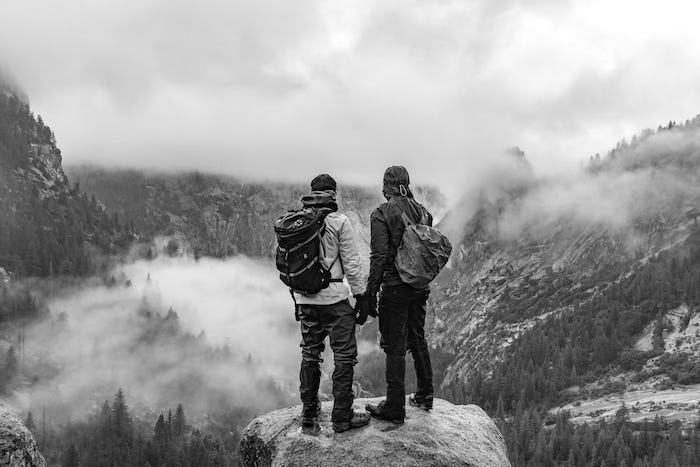
One of the great Everest mysteries is whether the early explorers Mallory and Irvine — before vanishing high on the mountain — actually ever made it to the top in 1924 before they died.
Mallory’s body was found in 1999, and Irvine’s remains were discovered in 2024, but there’s no proof of whether they reached the peak before Edmund Hillary and his Sherpa, Tenzing Norgay, did in 1953.
Even then, the proof is a little sketchy compared to modern standards.
Hillary — a beekeeper from New Zealand — did take a photo of Norgay at the summit, but Tenzing did not turn around and take one of Hillary.
It sounds a little bizarre now, but this historic ascent is accepted only because of the expedition record and the testimony of the two climbers.
That’s all the proof we have, but 70 years ago it was enough to get Hillary a knighthood before he even descended.
All this travel talk reminds me of a more local example, one that still makes me smile.
Decades ago, before texting and digital cameras, I was directing a very small project for a good friend’s acting reel.
I’d written some short pieces around other actors I adored while drafting in crew members who owed me a favor or two.
Rapidly assembling the whole project for a three-day shoot, I was increasingly alarmed that someone I really wanted to cast — Sully, a brilliantly madcap actor/writer — wasn’t returning my calls.
(Again, this was in the days before constant digital connectivity.)
We finally heard from Sully at the last possible moment.
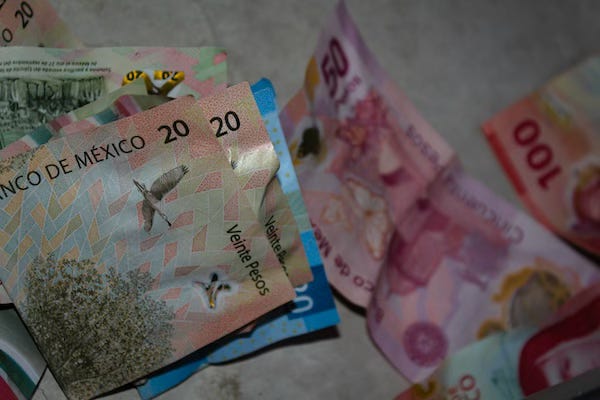
He apologized profusely, explaining that he’d taken off for an impromptu trip to Mexico to work on his book.
Teased mercilessly by one of the crew that he was probably just hiding out in his Queens apartment, Sully showed up on set completely pale, yet armed with an unstamped postcard, a guidebook, and some pesos.
Unconvinced, the crew member smiled wickedly, announcing that:
“I guess we can all finally relax,
now that Sully has proven
the existence of Mexico.”
Since my marketing team is tending to the algorithm (via the new Substack HERE and other campaigns), I reminded myself of advice a hugely bestselling author once gave me:
Keep lots of copies of your book handy and just give them out to people casually, devoid of any publicity agenda.
They believed this would lighten the experience, restoring a human level of connection and a touch of whimsy, ultimately taking pressure off sales goals.
This week, I vowed to do just that, slipping a few copies of the SGR Journal into my knapsack.
For about a nanosecond, I considered offering one to Jerome, but a) it seemed a little strange since we’d never actually spoken, and b) I didn’t really want him to feel obligated to carry it to the top of Everest.
More to the point, since a little research shows that the average budget of such an expedition ranges between $75K and $120K — and requires 6 – 9 weeks away from employment — and since he’s done it six times, he really might not need any financial advice.
Clearly he has, quite literally, already climbed that mountain.
Perhaps the most interesting takeaway here is that in high-altitude climbing, even in this digital age, proof is often less like a courtroom exhibit and more like a mosaic.
You need a combination of photos, witnesses, terrain knowledge, and ultimately the mountain community’s belief that your story hangs together.
This dovetails with my other essay this week — HERE — which is really about how people with the cleanest proof often have the least useful maps.
There are some advantages to getting lost as often as I have.
The more jagged journeys — even those where we never quite reach the summit — can not only teach us more, but they also end up being a lot more interesting.
Tell A New Story. Transform Your Life