
As mysteries go, I concede it’s not particularly CSI-worthy.
Even so, it’s haunted me all week.
Things began to get weird almost three weeks ago when my iPhone died in the January winter storm.
My new phone is superior in every way — except for one loss.
My favorite angel card app — one I’ve used every morning for years — is no longer available in the United States, taking with it a decade-plus record of my daily selections.
Accepting that was challenging enough.
Then this week something stranger happened:
One of the angel cards vanished from the deck.
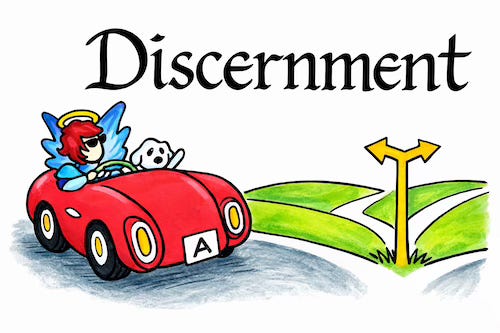
After I drew the Discernment card online, I went to the physical deck to find its counterpart — only to discover the angel was missing.
All of this is very odd, since none of the cards have traveled more than two feet in over a year.
This angel is a favorite of mine, in part because it features a white dog and shares my fondness for convertibles.
I also very much like the instructions for Discernment:
“Use your sharp-sightedness to make clear distinctions and wise choices.
Move forward with confidence in your inner compass.”
Going deeper, this inspired me to choose Discernment as the monthly theme — new meditation HERE — aware that it’s particularly ironic for an angel at the crossroads to go AWOL.

Speaking of crossroads, one of our most beloved — and most misread — poems is Robert Frost’s The Road Not Taken.
Often quoted like a motivational poster for bold decisions and unconventional paths, what it’s actually saying is far more subtle.
The Road Not Taken
Two roads diverged in a yellow wood,
And sorry I could not travel both
And be one traveler, long I stood
And looked down one as far as I could
To where it bent in the undergrowth;
Then took the other, as just as fair,
And having perhaps the better claim,
Because it was grassy and wanted wear;
Though as for that the passing there
Had worn them really about the same,
And both that morning equally lay
In leaves no step had trodden black.
Oh, I kept the first for another day!
Yet knowing how way leads on to way,
I doubted if I should ever come back.
I shall be telling this with a sigh
Somewhere ages and ages hence:
Two roads diverged in a wood, and I—
I took the one less traveled by,
And that has made all the difference.

Everyone remembers the standout line:
“I took the one less traveled by…”
But earlier the poet tells us:
“Though as for that the passing there
Had worn them really about the same.”
And:
“Both that morning equally lay
In leaves no step had trodden black.”
In other words, the paths are essentially the same.
He’s not talking about heroic nonconformity.
Instead, it’s about the meanings we construct after the fact, the stories we tell ourselves about our choices.
That’s what matters.

Regarding those paths that travelers “had worn them really about the same,” I can’t help but recall a memorable conversation I had with a dear friend right after college.
A bombshell beauty — and a very flirtatious one — we were having drinks at a fashionable wine bar as she brought me up to speed with her love life.
I was sincerely trying to keep the narrative straight, but it was challenging — especially since she’d dated three guys over the last few months, all improbably named “Mike.”
At one point, I interrupted the narrative to ask “Which Mike was that again?”
The bombshell didn’t miss a beat, responding — while topping off my glass —
“Honestly, does it really matter?”
And continuing on with her narrative.

I learned this week that Robert Frost actually wrote The Road Not Taken partly as a gentle satire of his close friend Edward Thomas.
When Frost was living in England in 1912-1914, they took long walks together in the countryside.
Thomas had the melancholy habit of regretting whichever path they hadn’t taken, speculating the other route might have been more interesting or beautiful.
This amused — and perhaps slightly exasperated — Frost.
In letters and later commentary, Frost indicated the poem was meant to be playful, even ironic — expecting Thomas to recognize himself in it.
Unlike my bombshell friend’s awareness that “the Mikes” were all pretty interchangeable, this was lost on Thomas.
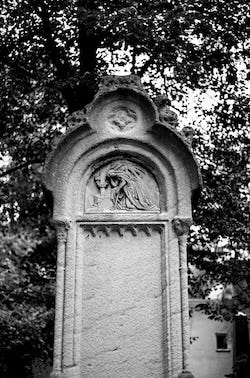
Instead of appreciating Frost’s gentle ribbing, he mistook the poem for a triumphant declaration of nonconformity, as something one might carve on a tombstone.
For this month’s Transformation Book Club I’ve selected The Courage to Be Disliked by Ichiro Kishimi and Fumitake Koga.
Written as a lively dialogue between a philosopher and a questioning young man, the book proposes that happiness comes from releasing yourself from the grip of the past, the expectations of others, and the craving for approval.
Its message echoes the Discernment Angel directly, suggesting real freedom begins when you choose your own path.
Even more radical is the book’s invitation — drawn from the psychology of Alfred Adler and in harmony with Frost’s poem — to recognize that your life is shaped not by past trauma, but by the meaning you decide to give it.
Please consider joining us — and supporting this newsletter — HERE.
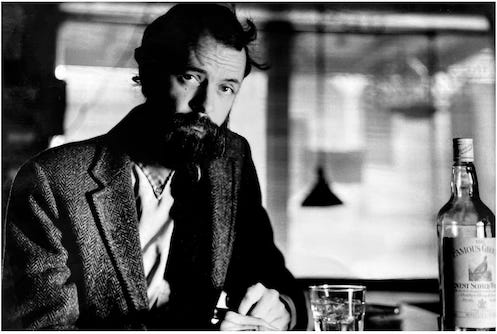
The poet Everette Maddox at The Maple Leaf Bar, c. 1982. Photo courtesy of Ralph Adamo.
Returning to the topic of what you might carve on tombstones…
I traveled down a brief rabbit hole with another poet this week, one I just learned about HERE: Everette Hawthorne Maddox.
Maddox was often called the unofficial Poet Laureate of New Orleans, living a life remarkable for its wit, talent, and excesses, ranging from alcoholism to homelessness.
Dying at the age of 44 from esophageal cancer in 1989, in a rare radio interview, Maddox wryly proclaimed:
“Everyone should have an epitaph ready,
just in case.”
He actually wrote his own about a decade earlier and it perfectly captures his tortured but brilliant inner life.
Hypothetical Self-Epitaph
What if I just caved in
gave out, pulled over
to the side of
the road of life,
& expired like an old
Driver’s license?
You might say He didn’t
get far in 31 years.
But I’d say That’s
all right, it was
the world’s longest trip
on an empty tank.
Perhaps even more ironic is Maddox’s actual headstone.
His ashes are buried in the patio behind the Maple Leaf Bar where he founded the longest running poetry series in the South.
The tombstone simply reads: “Everette Maddox – He was a mess.”
It doesn’t get more honest than that.

One line that haunts me from The Courage to Be Disliked is
“No matter what has occurred in your life up to now,
it should have no bearing at all on how you live from this point forward.”
That’s pretty much my AWOL Angel’s second line exactly:
”Move forward with confidence in your inner compass.”
And maybe that’s what Frost is really telling us: the real fork is internal.
Discernment is not about finding a pre-marked path, certainly not one with a clear traffic signal.
It’s about recognizing the ambiguities and unknowability of our choices — and choosing anyway.
Most importantly, it’s about owning the story you tell — no matter how messy — even if it’s “the world’s longest trip on an empty tank.”
In the end, perhaps it’s not about “which Mike was it anyway?” but the person you’re telling the story to right now— especially the person (or dog) in the passenger seat, joyfully along for the ride.
Tell a New Story | Transform Your Life